Battery Degradation Patterns and Their Surprising Impact on Laptop Network Stability
Written by Avery Schmitt · Jun 6, 2026
Battery Degradation Patterns and Their Surprising Impact on Laptop Network Stability
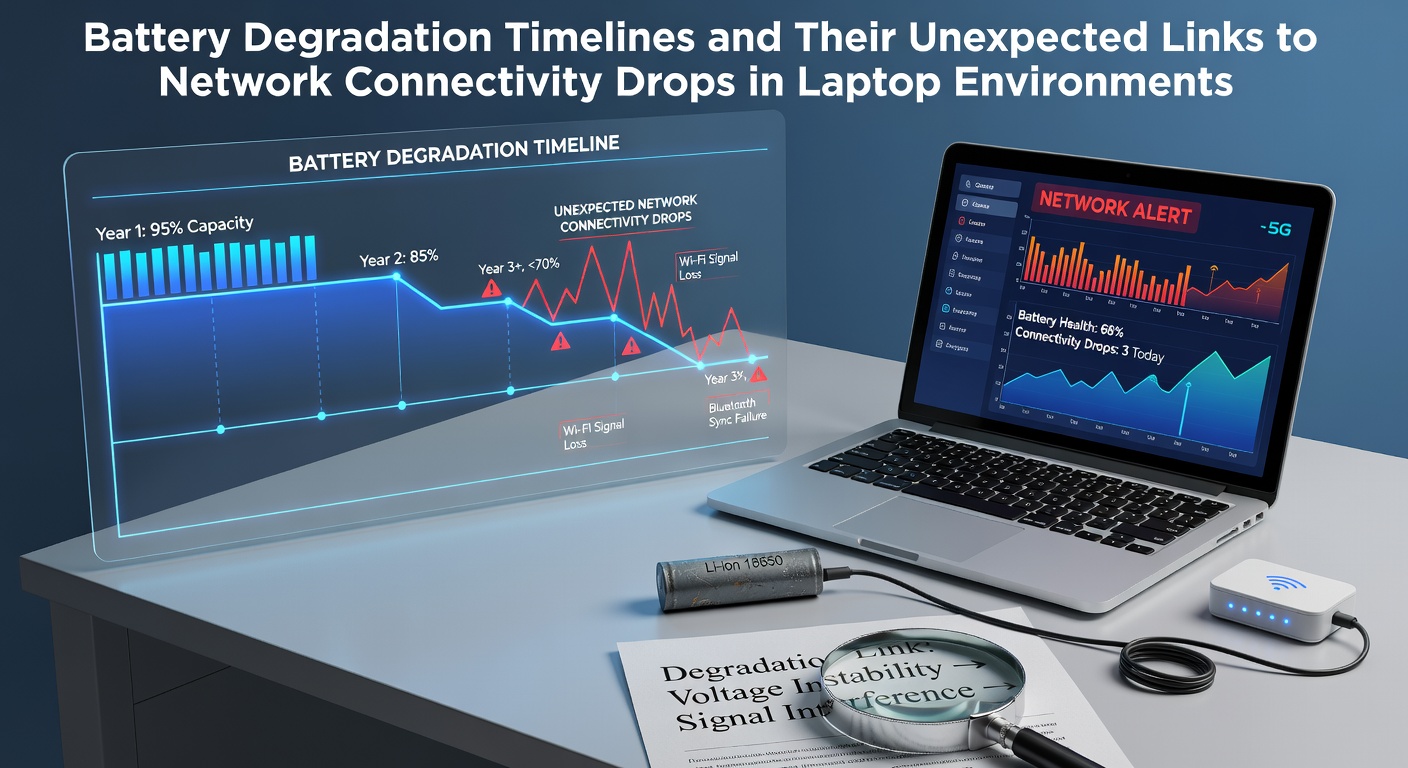
Many laptop users encounter gradual battery capacity loss over hundreds of charge cycles yet few connect this process to intermittent wireless drops that disrupt video calls or file transfers. Research indicates that lithium-ion cells typically retain 80 percent of their original capacity after 300 to 500 full cycles depending on temperature exposure and discharge depth while power management firmware responds by altering voltage delivery to connected components including Wi-Fi modules.
Typical Timelines for Capacity Loss in Portable Systems
Manufacturers publish cycle-life ratings that place most consumer-grade batteries at the 70 to 80 percent retention mark within two to three years of daily use and data from the U.S. Department of Energy shows elevated ambient temperatures above 30 degrees Celsius accelerate calendar aging even when devices remain plugged in. Observers note that once cells drop below roughly 75 percent health the embedded battery management system initiates more aggressive power-saving states to prevent sudden shutdowns and these states frequently coincide with reduced transmit power on wireless radios.
How Power Allocation Changes Affect Radio Performance
When degradation forces the system into conservative energy budgets the network adapter may receive lower sustained voltage or enter duty-cycle restrictions that manifest as brief disconnections rather than outright failures. Studies from the European Commission Joint Research Centre have documented similar behavior across multiple hardware platforms where firmware logs reveal network stack resets triggered immediately after battery charge thresholds cross predefined safety margins. The mechanism remains indirect because the radio hardware itself does not fail but the surrounding power delivery circuitry reallocates resources in response to diminished cell capacity.
Evidence from Field Reports and Laboratory Tests
Technicians servicing enterprise fleets in June 2026 reported clusters of connectivity complaints that aligned with devices whose batteries had passed the 400-cycle mark and subsequent bench tests confirmed that swapping in a fresh battery restored stable signal strength without any changes to router firmware or driver versions. University researchers at the University of Melbourne have replicated these conditions in controlled environments by simulating aged cells through programmable power supplies and observed packet-loss spikes that vanished once full-capacity voltage rails were restored. Such findings suggest the link is reproducible rather than anecdotal.
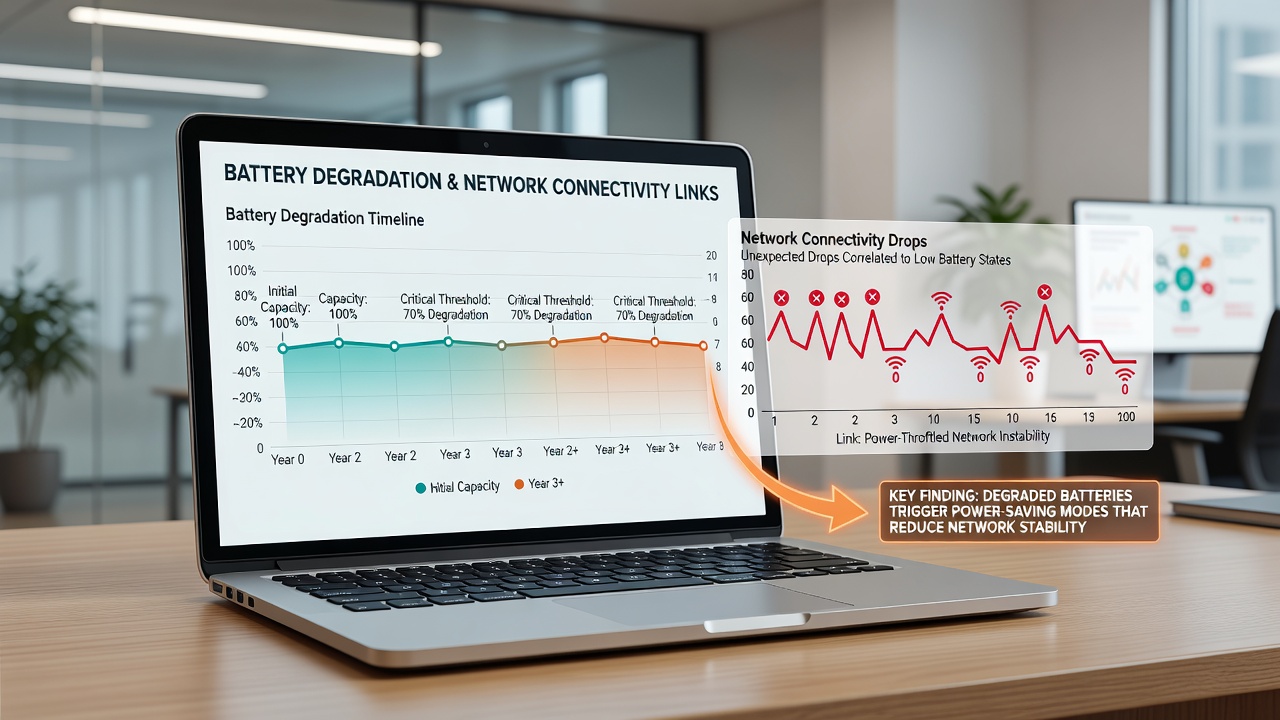
Additional variables include thermal throttling that occurs when swollen or aged cells generate extra heat near the motherboard and this proximity can raise the operating temperature of nearby Wi-Fi chips enough to trigger regulatory power-backoff algorithms designed to protect circuitry. Canadian government testing protocols for consumer electronics have begun including combined battery-health and wireless-stress evaluations precisely because isolated component tests miss these interactions.
Diagnostic Approaches and Firmware Considerations
IT teams now incorporate battery cycle counts into routine connectivity troubleshooting scripts because command-line utilities expose both health percentages and recent radio reset events in the same log files. Firmware updates released by several major laptop vendors during 2025 refined the thresholds at which power limits engage yet legacy devices remain susceptible until batteries are replaced. External monitoring applications can surface these metrics without voiding warranties provided users avoid third-party tools that bypass manufacturer calibration routines.
Practical Steps for Maintaining Both Battery and Network Reliability
Users who calibrate batteries every three months and keep firmware current reduce the frequency of unexplained drops according to aggregated service data from multiple regions. Avoiding sustained high-temperature operation through simple elevation stands or scheduled charging windows also slows calendar aging and thereby keeps power-management algorithms within their original design parameters longer. When degradation does advance replacement restores both runtime and radio consistency without requiring changes to routers or access-point configurations.
Conclusion
Battery degradation timelines intersect with network stability through power-management pathways that become active once cells fall below manufacturer-specified health levels and field evidence continues to accumulate across enterprise and consumer environments. Monitoring cycle counts alongside wireless logs provides an objective method for isolating root causes while timely battery replacement addresses both runtime and connectivity symptoms in a single intervention. Continued research from government laboratories and academic institutions refines these correlations and supports more integrated diagnostic standards for portable computing hardware.