Cascading Impacts of Smart Gadget Adoption on Cybersecurity in Modern Households
Written by Tina Schmitt · Aug 26, 2026
Cascading Impacts of Smart Gadget Adoption on Cybersecurity in Modern Households
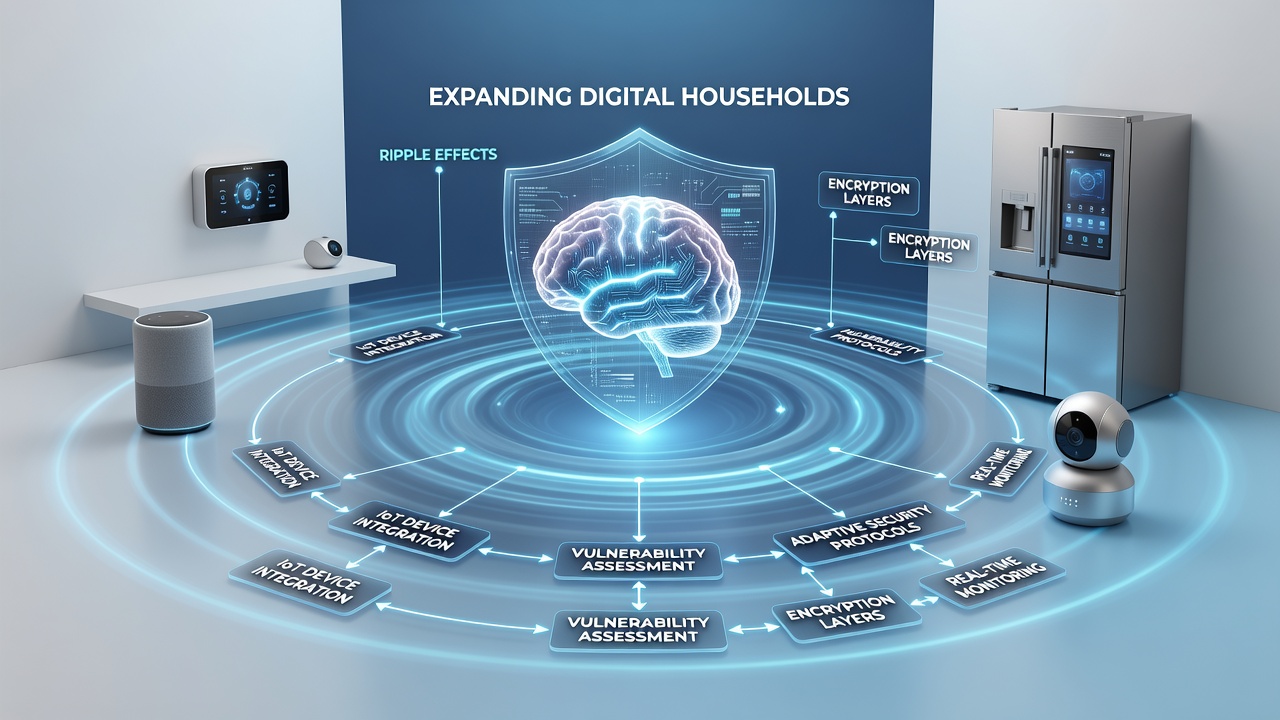
Households continue to incorporate additional connected devices at a steady pace, and this expansion creates layered effects on established cybersecurity structures that were often designed for fewer endpoints. Data from industry tracking services indicates that average connected devices per household reached 17.2 units by mid-2025, with projections pointing toward further increases through 2026. Such growth alters traffic patterns, permission models, and monitoring requirements across home networks.
Device Proliferation and Framework Adjustments
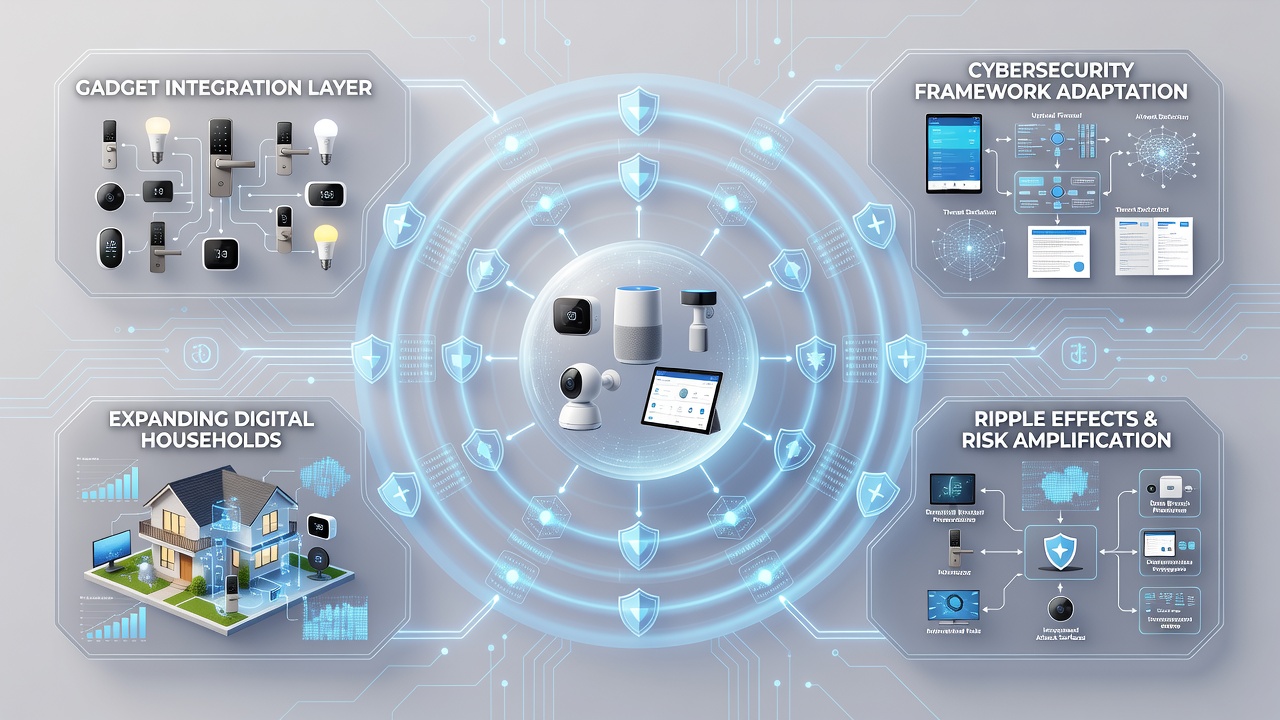
Integration of smart speakers, security cameras, lighting controls, and health monitors forces existing security protocols to handle increased data flows and diverse operating systems. Researchers at academic institutions have documented how each new device introduces unique firmware versions and communication protocols that interact with routers and cloud services in ways that can expose gaps in older segmentation practices. Those who manage home setups frequently discover that default configurations on newer gadgets override previous network rules, leading to unintended pathways for external access.
In August 2026, reports from the Australian Cyber Security Centre highlighted a 34 percent rise in incidents involving multi-device environments compared with the prior year, attributing much of the increase to inconsistent update schedules across brands. Observers note that these incidents often begin with a single low-priority device that serves as an entry point before affecting primary systems such as computers and storage drives.
Permission Layers and Data Movement Patterns
Mapping permission layers becomes more complex once households exceed ten active gadgets. Studies from university research groups show that many devices request broad network access during initial setup, and users rarely revisit those settings afterward. This pattern allows lateral movement between devices that would otherwise remain isolated, particularly when voice assistants link to calendars, thermostats, and media libraries simultaneously.
One analysis of permission graphs in multi-device homes revealed that 62 percent of examined setups granted at least one device access to resources beyond its core function. The European Union Agency for Cybersecurity has published guidelines encouraging manufacturers to adopt minimal-privilege defaults, yet adoption rates vary by region and product category. Those guidelines appear in technical documents that emphasize logging and segmentation as practical responses to expanding device counts.
Monitoring Challenges and Response Mechanisms
Traditional monitoring tools struggle to maintain visibility once device diversity increases, because each manufacturer uses distinct logging formats and alert thresholds. Network administrators in residential settings therefore rely more heavily on router-level analytics and third-party aggregation services to detect anomalies. Figures released by the Canadian Centre for Cyber Security indicate that households using centralized monitoring platforms experienced 28 percent fewer confirmed breaches during the first half of 2026 than those relying solely on individual device notifications.
What's interesting is how firmware update cycles interact with these monitoring gaps. Many gadgets receive patches on staggered schedules that leave temporary windows where known vulnerabilities remain exploitable. Experts have observed that coordinated update campaigns across multiple brands reduce those windows, yet coordination remains rare outside major ecosystems.
Longer-Term Structural Shifts
Over time, the accumulation of gadgets encourages households to adopt more modular network designs that separate guest traffic, media streaming, and control systems. Data indicates that homes implementing such separation report lower rates of unauthorized access attempts reaching core storage or personal computers. Academic papers examining these configurations note that the initial setup effort is higher, but ongoing maintenance becomes simpler once clear boundaries exist.
Regulatory bodies in multiple jurisdictions continue to refine labeling requirements for device security features, aiming to give consumers clearer information before purchase. These efforts address the reality that many incidents trace back to devices added without full awareness of their network implications.
Conclusion
The integration of additional gadgets into residential environments produces measurable changes in how cybersecurity frameworks operate, from permission management to update coordination and monitoring scope. Reports compiled through 2026 demonstrate consistent patterns across regions, underscoring the need for adaptive approaches that scale with device counts rather than assuming static network conditions. Continued observation of these dynamics will inform both household practices and manufacturer standards in the years ahead.