Chain Reactions in Domestic Tech Setups: The Unseen Consequences of Device Expansions
Written by Vera Klein · Jun 20, 2026
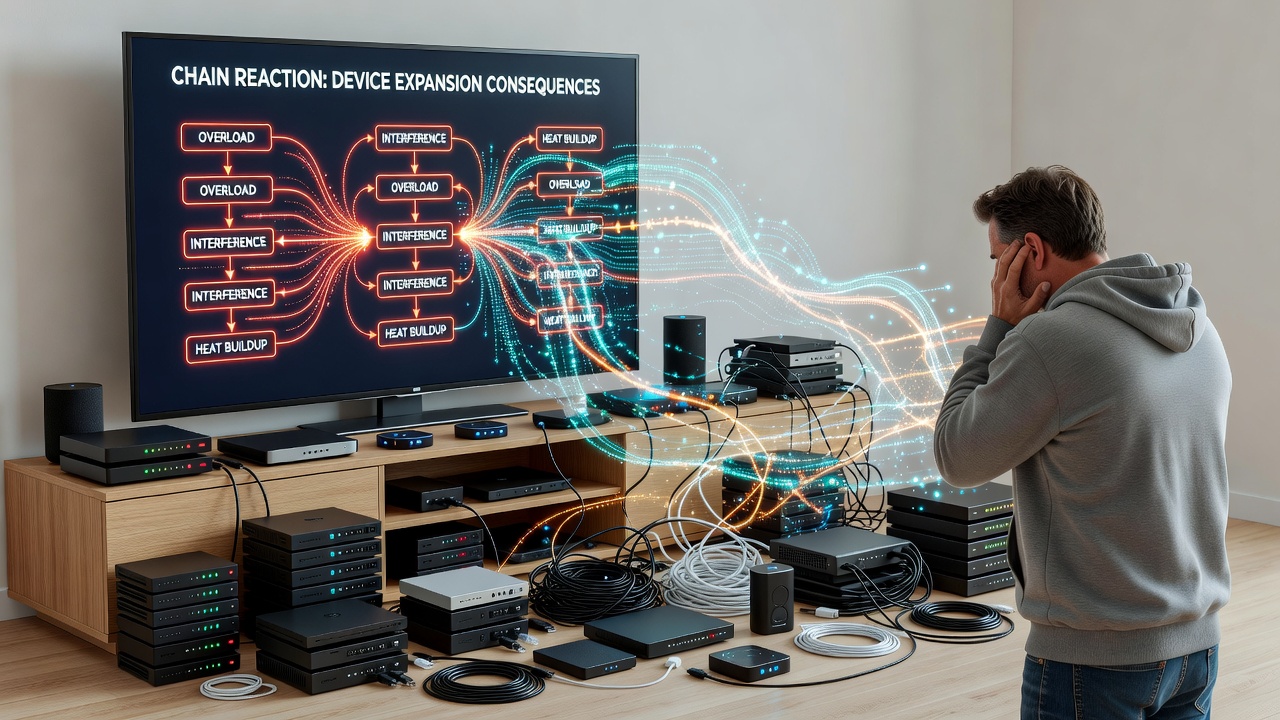
Chain Reactions in Domestic Tech Setups: The Unseen Consequences of Device Expansions
Adding new gadgets to household environments triggers sequences of technical interactions that extend far beyond the initial installation, and observers note how these patterns emerge gradually across connected systems. Data from recent monitoring indicates that each additional smart speaker, camera, or appliance integrates into existing networks while altering bandwidth allocation, signal distribution, and security perimeters in measurable ways.
Network Load and Interference Patterns
Household routers handle traffic from an expanding array of endpoints, and studies conducted by the National Institute of Standards and Technology reveal that average connected devices per residence reached 22 units by early 2026. When a new streaming device joins the setup, it competes for spectrum alongside phones, tablets, and automated sensors, which produces latency spikes during peak usage periods. Technicians document cases where Wi-Fi channel overlaps intensify after the fifth or sixth wireless addition, because frequency bands become saturated without manual reconfiguration.
Signal degradation follows predictable paths once multiple access points operate in close proximity, and interference compounds when older routers lack modern band-steering capabilities. Residents experience buffering during video calls after installing a new gaming console, yet the root cause traces back to the cumulative device count rather than any single unit. Research teams at technical universities have mapped these effects across urban test homes, confirming that throughput drops by up to 35 percent once device totals exceed typical thresholds.
Security Vulnerabilities That Propagate
Each connected item introduces potential entry points, and threat analyses from the European Union Agency for Cybersecurity show that unauthorized access attempts rise proportionally with the number of IoT endpoints. A compromised smart bulb can serve as a pivot for lateral movement toward more critical systems such as storage drives or voice assistants, because many manufacturers ship devices with default credentials that remain unchanged. Network segmentation becomes necessary once expansions reach double digits, yet many domestic configurations retain flat topologies that allow threats to traverse freely.
June 2026 updates to firmware standards prompted manufacturers to enforce stronger authentication protocols on new releases, but legacy hardware already present in homes continues to operate under older rules. This creates mixed environments where newer devices communicate securely while older ones expose gaps that attackers exploit through chain-style exploits. Observers tracking incident reports note that multi-device households file more frequent support tickets related to account takeovers compared with minimal setups.
Power Consumption and Thermal Effects
Electricity draw increases steadily as device counts grow, and utility data collected across North American regions shows households with expanded smart ecosystems consuming 18 percent more standby power than those maintaining fewer connections. Always-on sensors and hubs generate continuous heat that affects surrounding equipment, and this thermal buildup shortens component lifespans when ventilation remains inadequate. Technicians report cases where routers placed near clusters of power adapters exhibit higher failure rates after three years of operation.
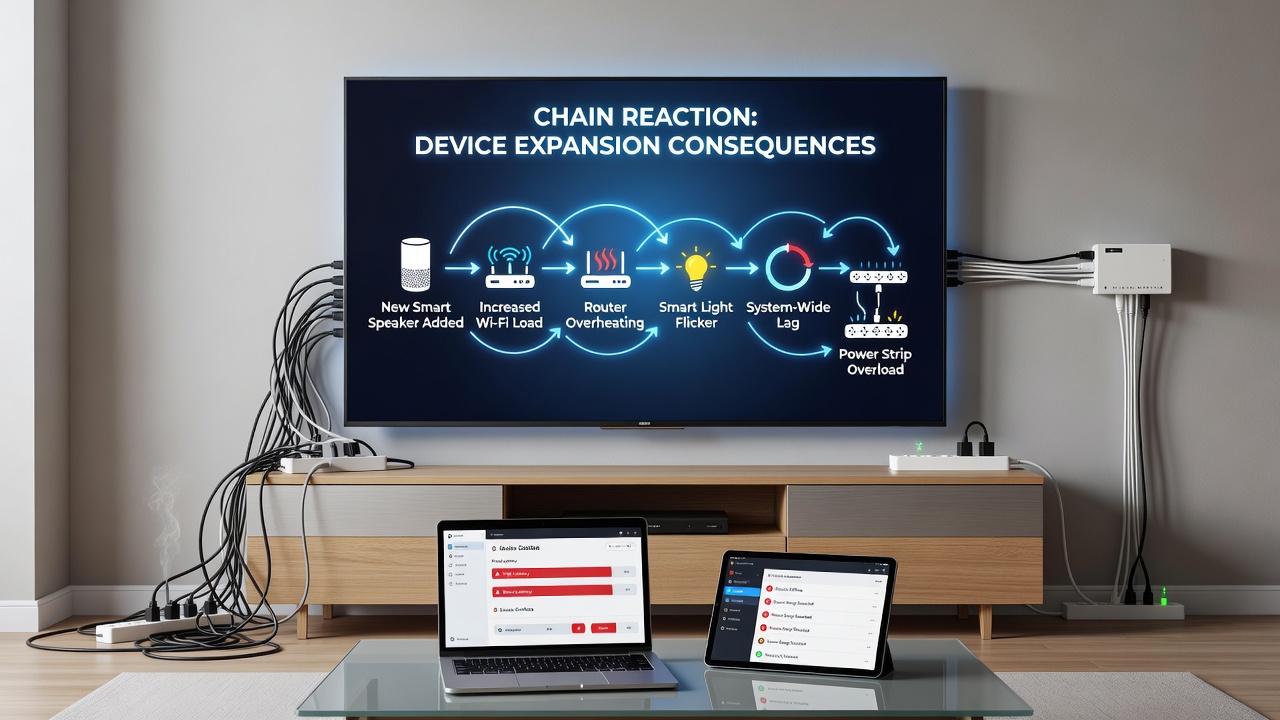
Energy management applications attempt to track these loads, yet they often overlook the background consumption from mesh extenders and backup storage units that activate during routine backups. When a new NAS device joins the network for centralized file storage, its indexing processes trigger additional network activity that indirectly raises power usage across the entire local area network.
Data Management and Storage Ripple Effects
Cloud synchronization services expand their footprint once multiple cameras and phones begin uploading footage, and service providers adjust tiered pricing structures in response to aggregate data volumes. Local storage solutions become necessary when upload caps are reached, and this shift introduces new maintenance tasks such as drive health monitoring and backup verification. Researchers examining long-term household data patterns have identified correlations between device proliferation and increased frequency of manual data pruning sessions.
Permission layers within mobile operating systems grow more complex as users grant access to additional applications, and mapping these layers prevents unintended data flows between unrelated apps. One study released by an Australian research institute documented how fitness trackers inadvertently shared location metadata with home automation platforms through shared cloud accounts, creating secondary data exposure routes that users had not anticipated during initial setup.
Conclusion
Domestic technology expansions produce interconnected effects across network performance, security posture, energy use, and data handling, and quantitative tracking continues to document these interactions in real time. Households that monitor device counts and implement periodic audits maintain more stable configurations, whereas unmanaged growth leads to cumulative strain that surfaces during routine operations. Technical documentation from regulatory bodies and academic sources provides frameworks for anticipating these outcomes before they manifest in daily use.