Device Addition Dynamics: Examining Cascading Effects in Home Network and Security Setups
Written by Tina Schmitt · May 23, 2026
Device Addition Dynamics: Examining Cascading Effects in Home Network and Security Setups
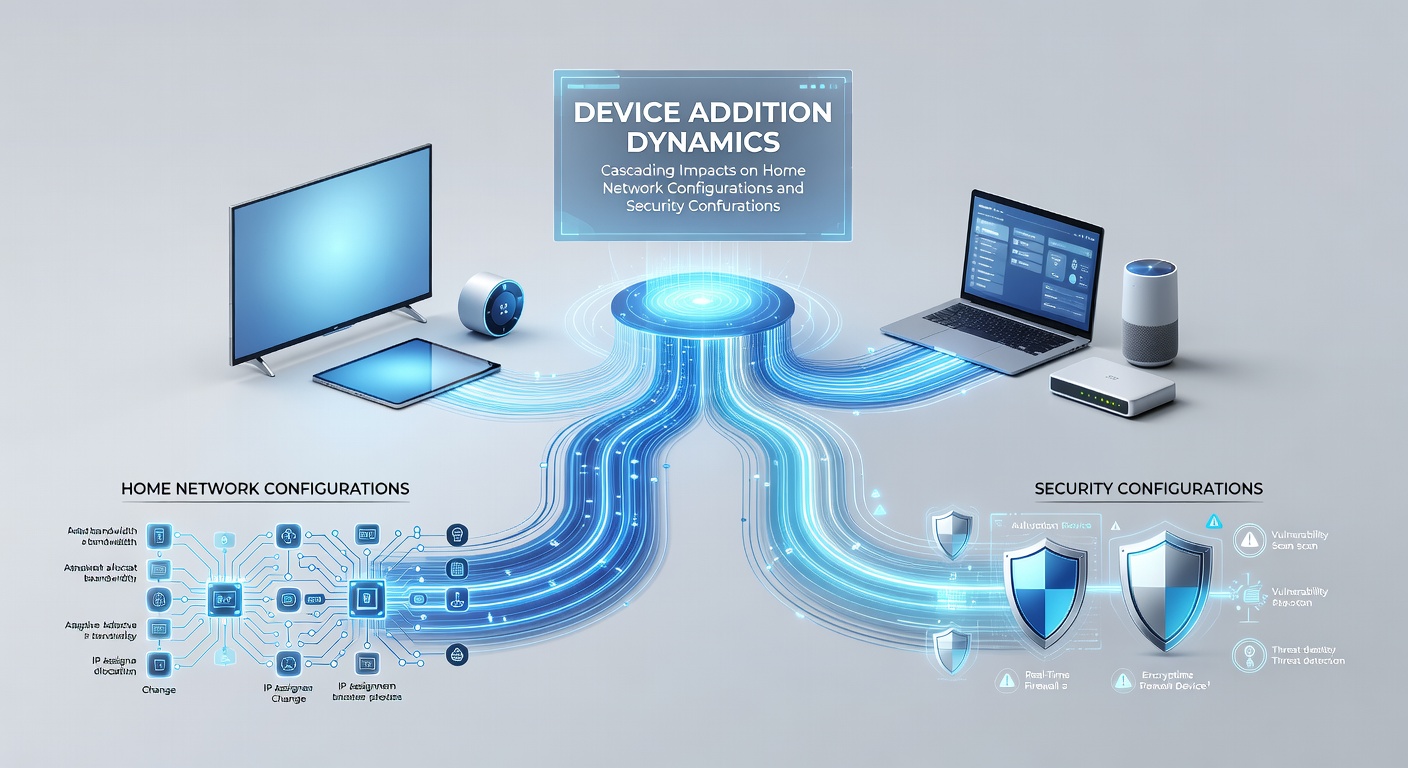
Adding new devices to residential networks triggers immediate shifts in configuration requirements and security parameters that extend well beyond the initial connection process. Research from the Australian Cyber Security Centre indicates that households in major cities experienced an average increase of 12 connected devices per residence between 2023 and 2025, with projections showing continued growth through May 2026 as smart home adoption accelerates in regions across North America and Europe.
Network address translation tables expand quickly when new smartphones, tablets, and IoT sensors join existing setups, forcing routers to manage larger pools of IP assignments while maintaining stable throughput for all endpoints. Observers note that this expansion often requires adjustments to DHCP lease times and subnet masks to prevent address conflicts that disrupt streaming services or remote work sessions.
Configuration Shifts Triggered by Device Growth
Bandwidth allocation changes follow directly from device additions because each new endpoint competes for upstream and downstream capacity during peak usage hours. Data from the IEEE Communications Society shows that video conferencing tools and cloud synchronization applications consume disproportionate shares of available spectrum once five or more additional wireless clients activate simultaneously. Technicians routinely observe that Quality of Service rules must be updated to prioritize business-critical traffic over entertainment streams after such expansions occur.
Wireless channel selection becomes more critical as device density rises, since overlapping signals from neighboring networks create interference that degrades performance across the 2.4 GHz and 5 GHz bands. Studies conducted at the University of Toronto found that homes adding three or more smart speakers within a six-month period required manual channel reconfiguration 68 percent more frequently than those maintaining stable device counts.
Security Parameter Adjustments and Vulnerability Windows
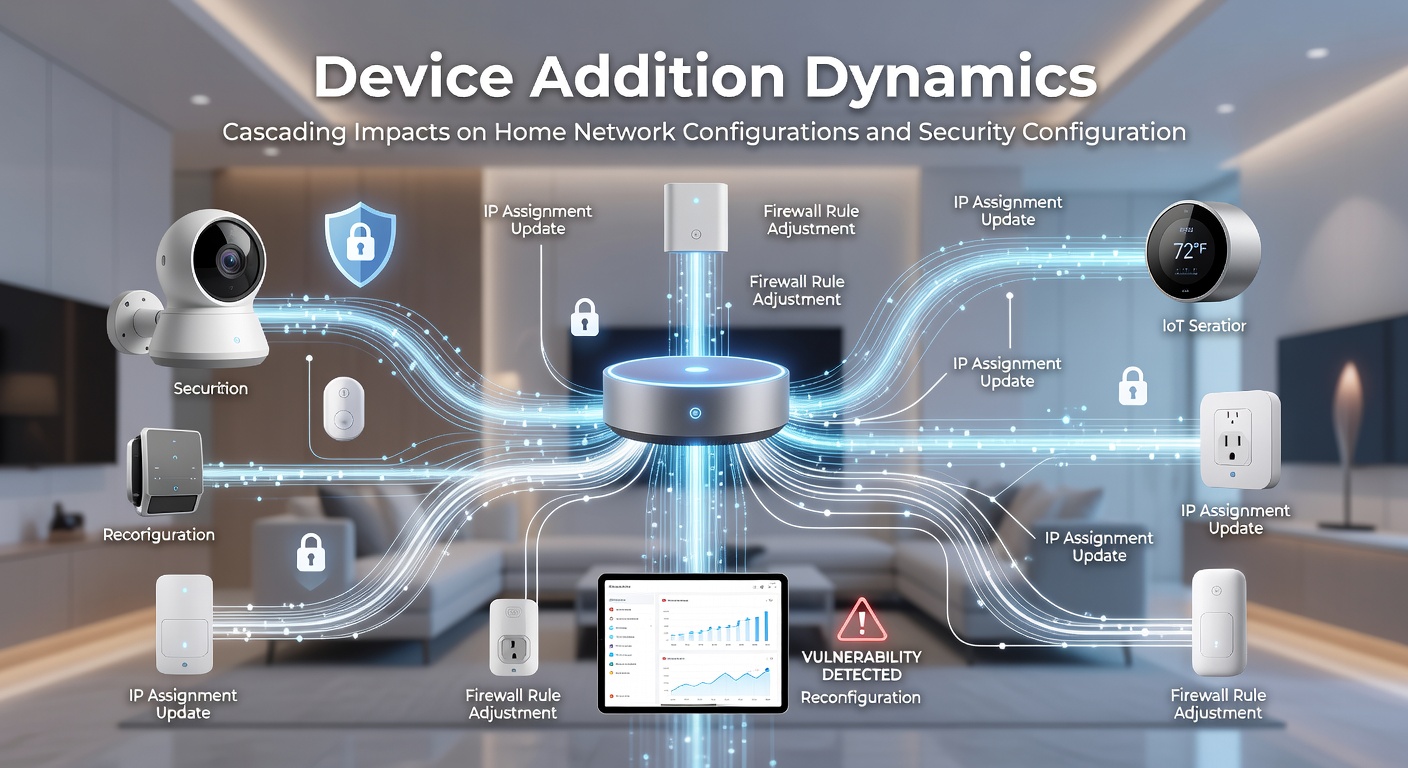
Firewall rule sets expand to accommodate new device types, yet each addition introduces potential entry points that demand updated access controls and port filtering. Evidence gathered by the Canadian Centre for Cyber Security reveals that unauthorized access attempts targeting residential routers increased 23 percent in 2025 among households that integrated smart lighting systems without revising default credentials. Those who've studied these patterns recognize that firmware updates must occur before or immediately after device onboarding to close known exploits that attackers scan for within hours of public disclosure.
Encryption protocols require verification across all new connections because older devices sometimes default to weaker standards that weaken the overall network posture. Researchers at the European Union Agency for Cybersecurity documented cases where a single legacy printer left on WPA2-TKIP reduced protection levels for an entire mesh network until administrators enforced WPA3 across the board.
Cascading Impacts Across Multi-Device Environments
Once initial additions occur, secondary effects appear in areas such as DNS resolution loads and VPN tunnel capacities that were not obvious at the outset. A single added gaming console can increase outbound connection attempts by several hundred per hour during online play, prompting routers to adjust state tables and timeout values to avoid session drops. Those monitoring these environments report that parental control lists and device grouping features require expansion to maintain consistent policy enforcement after children receive new tablets or laptops.
Mesh network backhaul links face added strain when users install range extenders or additional access points to support the growing inventory of wireless clients. Figures released by the Wi-Fi Alliance indicate that homes exceeding 25 connected devices experience measurable latency increases on backhaul connections unless dedicated wireless bands are reserved exclusively for inter-node communication.
Practical Responses Observed in Current Practice
Network segmentation through VLANs or guest networks emerges as a standard response once device counts surpass typical thresholds, separating IoT appliances from personal computers and mobile phones. This separation limits lateral movement opportunities for malware that might compromise one category of equipment. Administrators in enterprise-adjacent home offices often implement these divisions after experiencing initial breaches traced to unsecured cameras or thermostats.
Monitoring tools that track device behavior over time help identify anomalies introduced by new additions before they escalate into broader issues. Reports compiled by academic teams at the University of Melbourne highlight that continuous logging of MAC addresses and traffic patterns enabled earlier detection of rogue devices attempting to join networks without authorization.
Conclusion
Device addition dynamics produce measurable changes in both the operational configuration and protective measures of home networks that accumulate over successive integrations. Organizations tracking these trends through May 2026 continue to document how incremental growth alters address management, bandwidth distribution, encryption enforcement, and segmentation strategies across residential environments. Continued attention to these interconnected effects supports stable performance and reduced exposure as households expand their connected inventories.