Embedding Reliable Backup Practices Within Standard Weekly Device Care Cycles
Written by Tina Schmitt · Jun 29, 2026
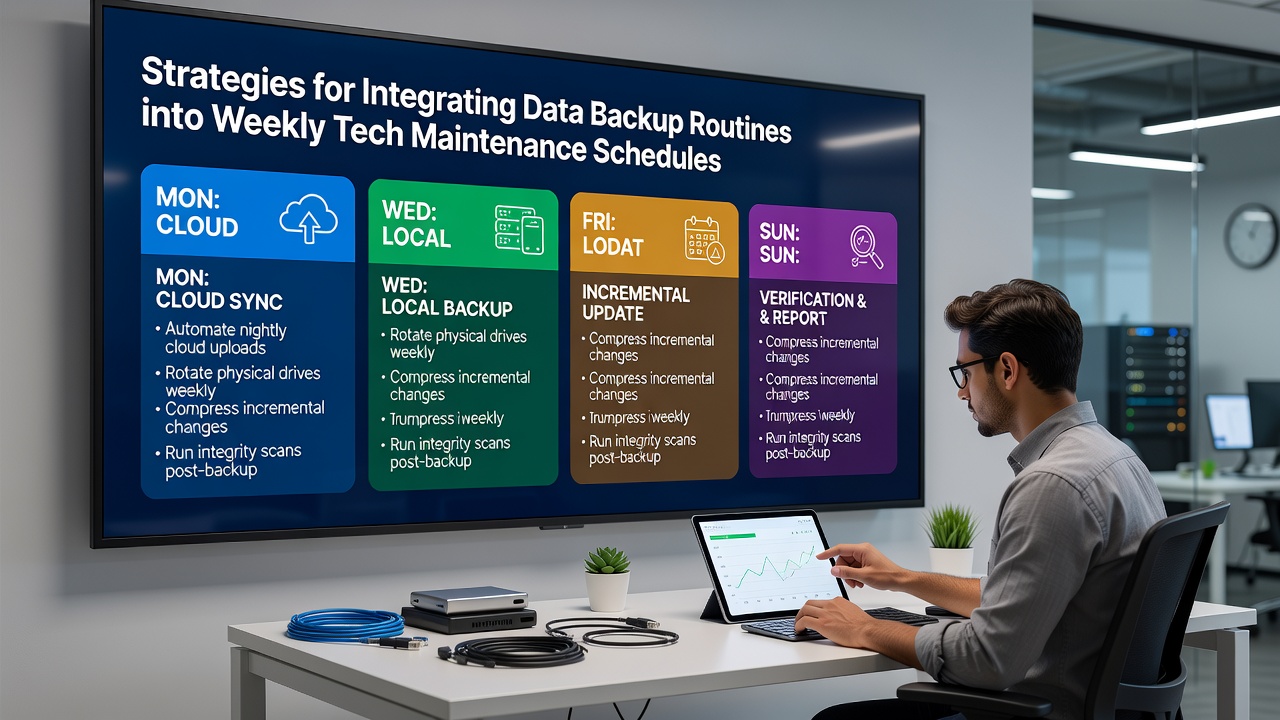
Embedding Reliable Backup Practices Within Standard Weekly Device Care Cycles
Organizations and individuals alike face mounting pressure to protect digital assets against hardware failures, ransomware incidents, and accidental deletions, which makes systematic data preservation a core component of ongoing technology upkeep. Research from government agencies shows that consistent routines reduce recovery times significantly when disruptions occur, and observers note that tying these routines directly to weekly maintenance windows creates natural checkpoints without requiring separate dedicated sessions.
Mapping Existing Maintenance Windows to Backup Tasks
Many households and small businesses already follow recurring patterns for software updates, disk cleanup, and performance checks, which creates opportunities to layer backup operations into those same time blocks. Experts have observed that aligning incremental file copies with update cycles prevents overlap with peak usage hours, while full system images can run overnight on the designated maintenance day. Data indicates that this consolidation cuts administrative overhead because one session handles both security patches and data replication.
Selecting Tools That Fit Weekly Cadences
Automated software solutions now support granular scheduling options that match typical seven-day cycles, allowing users to set rules for daily deltas, weekly full backups, and monthly verification runs. Studies from academic institutions reveal that cloud-based services with API hooks integrate smoothly into scripts that trigger after routine maintenance scripts complete, whereas local external drives require physical connection reminders built into the weekly checklist. Figures from industry reports show higher compliance rates when tools include email or app notifications confirming successful completion.
Establishing Verification Steps Inside the Same Schedule
Backup routines gain reliability only when restore tests occur at predictable intervals, and technicians have found success by reserving the final portion of each weekly maintenance block for spot-check recoveries. This approach catches configuration drift early because any failed test immediately flags issues before the next cycle begins. According to NIST cybersecurity guidance, organizations that embed verification within existing maintenance achieve better audit outcomes than those treating backups as standalone events.
Handling Multi-Device Environments During Routine Checks
Networks containing phones, tablets, laptops, and servers demand coordinated backup policies so that no endpoint falls outside the weekly rhythm, and researchers discovered that centralized dashboards simplify this oversight by displaying status across all devices at a single glance. One case involved a mid-sized office that synchronized mobile device backups with the same evening slot used for server maintenance, which eliminated gaps that previously appeared during travel weeks. Evidence suggests that tagging each device type with its own retention policy within the shared schedule prevents storage bloat while maintaining coverage.
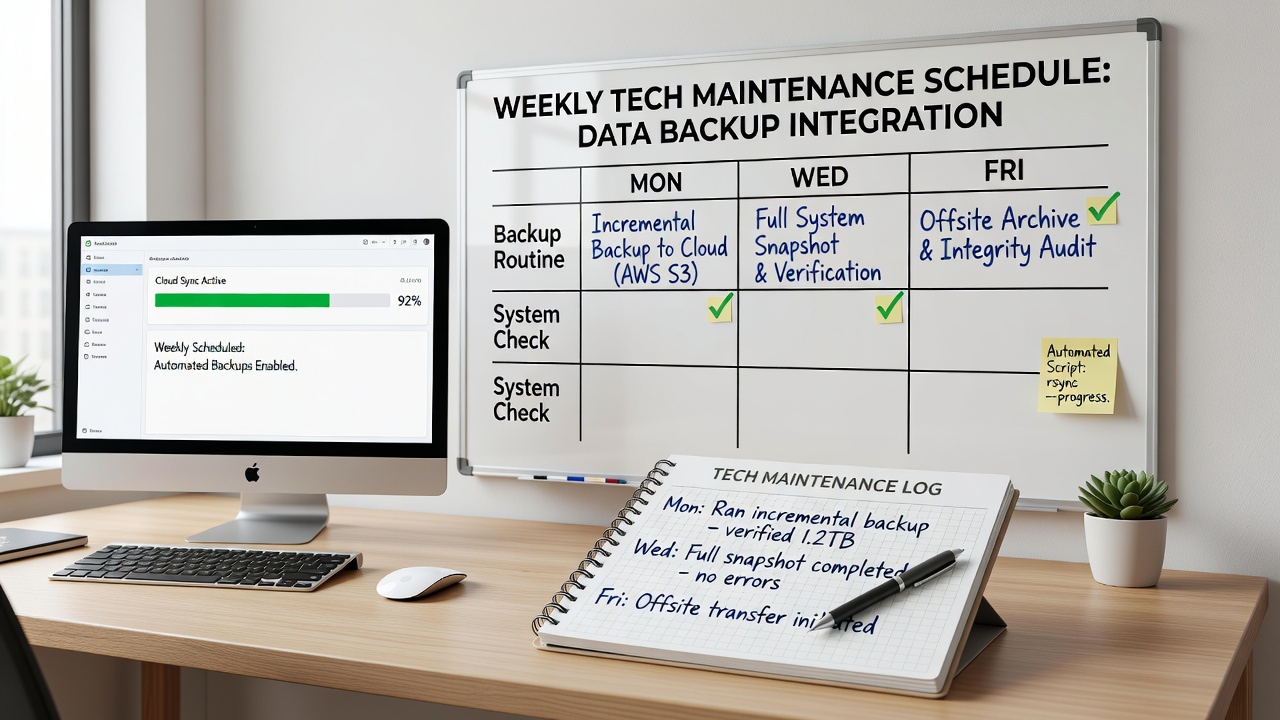
Adjusting for Seasonal or Event-Driven Shifts in June 2026
Calendar events such as fiscal year-ends or major software releases sometimes compress maintenance windows, yet planners who build flexibility into their weekly templates can shift backup priorities without breaking the overall cadence. Reports released around June 2026 highlighted increased ransomware activity during summer months, prompting many teams to add an extra verification pass during the first week of each month while keeping the core weekly structure intact. This measured response preserved continuity rather than overhauling the entire routine.
Addressing Common Integration Obstacles
Bandwidth constraints and storage limits frequently surface when backups compete with other maintenance tasks, but segmentation techniques such as running large image copies only on weekends while keeping daily file syncs lightweight have proven effective in practice. Observers note that documenting each adjustment in a shared log helps teams refine the schedule over successive weeks until conflicts disappear. Those who've studied adoption patterns across regions report similar success when European firms reference ENISA resilience recommendations alongside North American practices.
Conclusion
Successful integration of data backup into weekly tech maintenance rests on deliberate alignment of tools, timing, and verification steps rather than isolated efforts. Organizations that treat these elements as a single operational flow experience fewer gaps and faster recoveries when incidents arise, and the pattern continues to evolve as new automation features emerge.