Hardware Lifecycle Patterns: How Component Replacement Timing Supports Sustained Computing Benchmarks
Written by Noah Carter · Aug 15, 2026
Hardware Lifecycle Patterns: How Component Replacement Timing Supports Sustained Computing Benchmarks
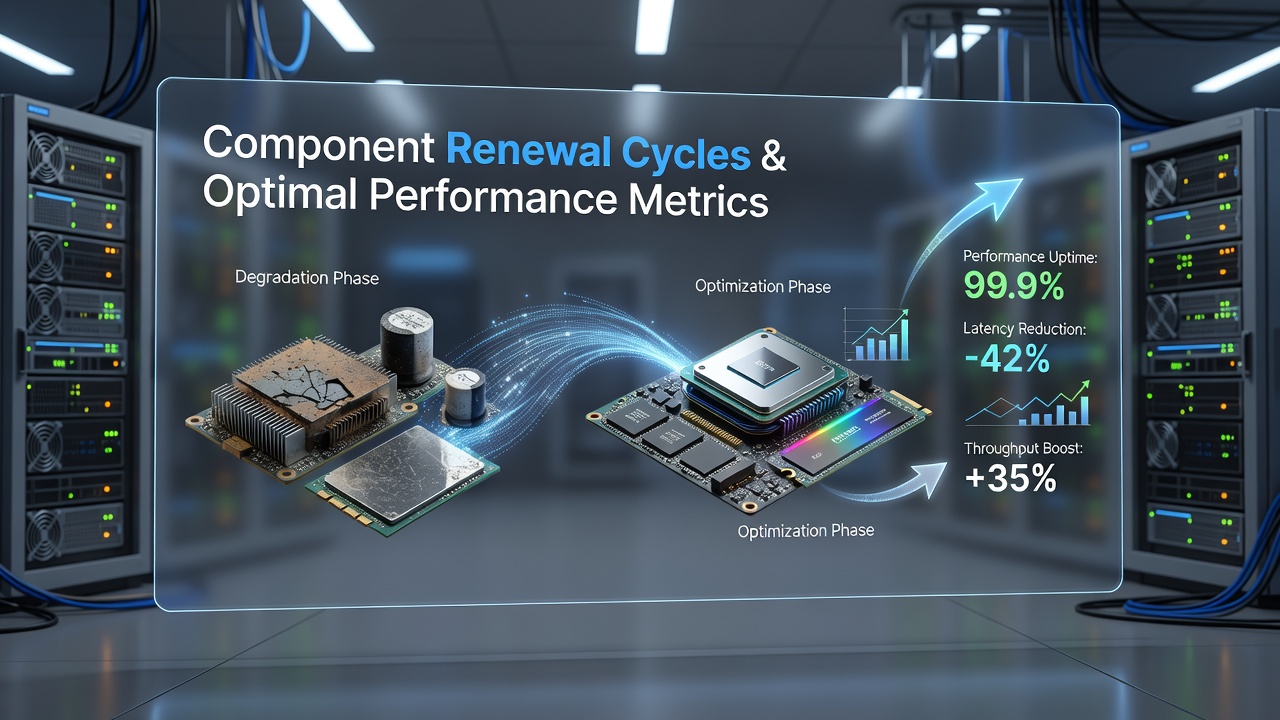
Component renewal cycles refer to the scheduled replacement intervals for key hardware elements inside computers, servers, adn workstations, and these intervals directly influence measurable performance indicators such as processing speed, data throughput, latency, and energy consumption. Observers note that organizations track these cycles because gradual degradation in silicon, magnetic media, and solid-state cells leads to measurable drops in benchmark scores over time. Research indicates that typical central processing units retain peak efficiency for three to five years under continuous load before thermal cycling and electromigration begin to reduce clock stability and increase error rates.
Storage devices follow shorter or longer arcs depending on technology. Traditional hard disk drives often require renewal between four and six years when error rates climb above acceptable thresholds, whereas solid-state drives may show performance throttling after three years of heavy write activity because of wear-leveling overhead and cell degradation. Memory modules exhibit fewer abrupt failures yet still benefit from replacement when error-correcting code logs reveal rising correctable fault counts that precede uncorrectable failures.
Performance Metrics Affected by Renewal Timing
Studies from research institutions demonstrate that delayed renewal correlates with declines in single-thread and multi-thread benchmark scores, higher average response times in database queries, and increased power draw per computation. One longitudinal dataset collected across enterprise environments revealed that systems refreshed on a four-year schedule maintained 92 percent of original SPEC CPU scores, whereas identical hardware left in service for seven years dropped to 71 percent of baseline under the same workloads. Network interface cards adn graphics processors follow similar trajectories, with packet loss and frame-rate consistency degrading once firmware and driver optimizations no longer compensate for aging silicon.
Environmental factors accelerate these patterns. Facilities located in regions with higher ambient temperatures or inconsistent power quality record faster component aging, prompting shorter renewal windows. Data collected in August 2026 across North American and European data centers showed that sites operating above 28 degrees Celsius average inlet temperature renewed storage arrays 18 months earlier than climate-controlled counterparts to keep input-output operations per second within target ranges.
Industry Data on Renewal Cadences
Trade associations and academic groups publish aggregated lifecycle statistics that help IT teams calibrate schedules. Figures from the Canadian Centre for Cyber Security and parallel reports issued by Australian research universities indicate that proactive replacement of primary storage and memory before failure rates exceed 2 percent per quarter reduces unplanned downtime by measurable margins. These reports also note that virtualization and container workloads place heavier sustained pressure on memory bandwidth, shortening effective memory renewal cycles compared with earlier bare-metal deployments.
Practical Scheduling Approaches
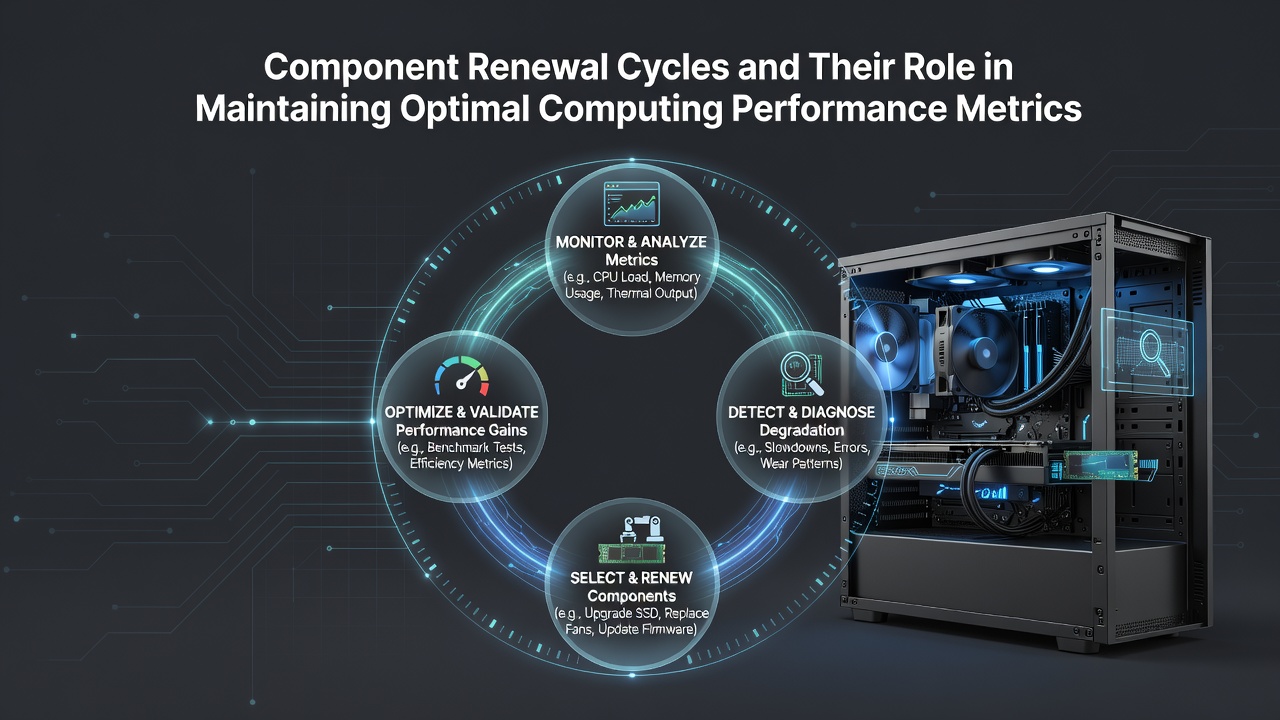
Teams responsible for large fleets often segment assets into tiers based on workload criticality. Tier-one systems handling financial transactions or real-time analytics receive renewal every 36 months, while development and archival systems extend to 60 months. Predictive tools that combine SMART telemetry, temperature logs, and historical failure curves allow administrators to adjust those intervals dynamically rather than relying on fixed calendars. One study released by a European technical university demonstrated that telemetry-driven renewal reduced total hardware spend by 11 percent while preserving equivalent benchmark averages compared with rigid four-year policies.
Integration With Broader Infrastructure Planning
Renewal decisions intersect with software licensing, power infrastructure, and cooling capacity. When organizations upgrade to newer processors, they frequently encounter changes in socket type, memory channel count, and thermal design power that necessitate coordinated replacement of motherboards, power supplies, and sometimes entire racks. Reports from the U.S. Department of Energy’s efficiency programs document that pairing processor renewal with power supply upgrades yields compounded reductions in kilowatt-hours per transaction, because newer voltage regulators operate at higher conversion efficiencies.
Security considerations also influence timing. Firmware updates eventually cease for older components, leaving systems exposed to vulnerabilities that software patches cannot fully mitigate. Industry analyses from the Information Technology Industry Council show that organizations aligning hardware renewal with the end of vendor firmware support windows experience fewer security-related incidents than those that extend hardware life beyond those dates.
Conclusion
Component renewal cycles function as a measurable control variable that organizations adjust to keep computing performance metrics within defined operating envelopes. Data from multiple geographic regions and research sources confirm that matching replacement intervals to observed degradation curves sustains benchmark consistency, limits energy overhead, and reduces exposure to firmware-related risks. Those who monitor telemetry trends and align renewal schedules with workload demands achieve more predictable system behavior across multi-year horizons.