Layered App Permissions Uncovered by Multi-Device Usage Patterns
Written by Avery Schmitt · Jul 1, 2026
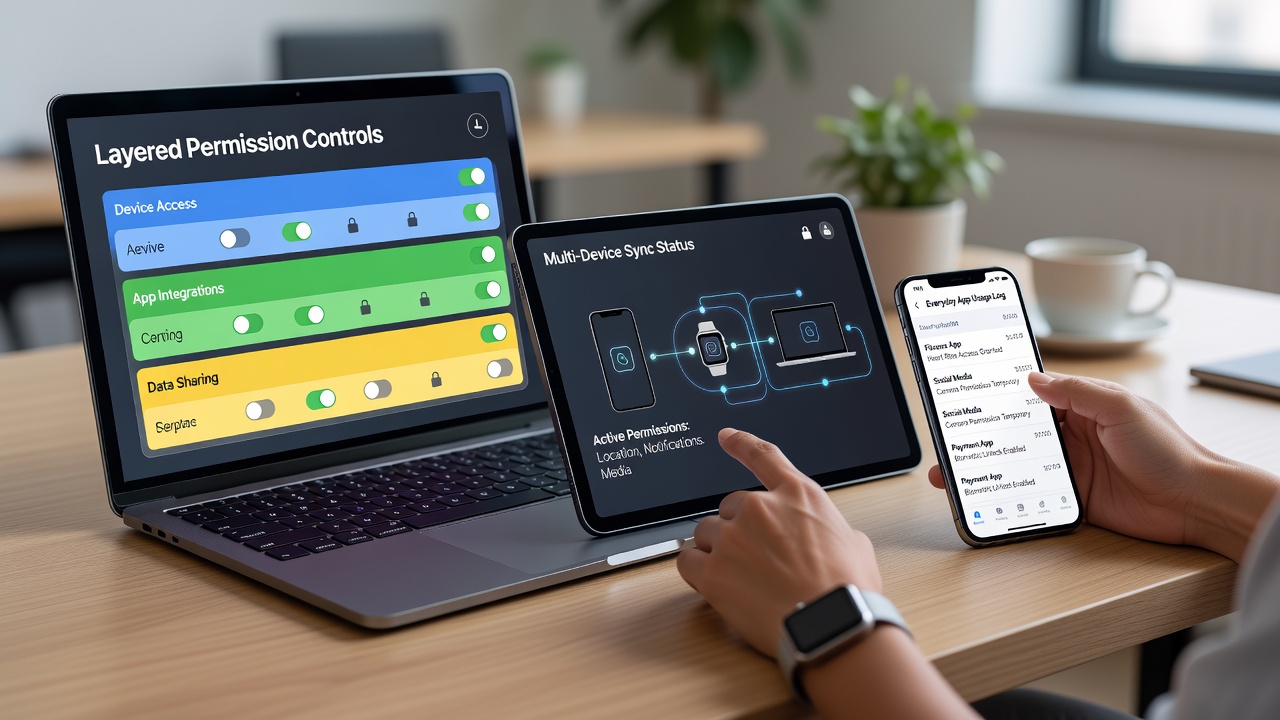
Layered App Permissions Uncovered by Multi-Device Usage Patterns
Multi-device environments demonstrate how permission controls operate in distinct layers that users encounter during routine interactions with applications on phones, tablets, and computers. Data from device synchronization studies shows these layers include initial installation grants, runtime access requests, and background data sharing settings that function differently depending on the operating system and hardware combination in use. Researchers tracking user behavior across platforms note that inconsistencies arise when an app requests location access on one device while the same permission remains restricted on another linked through the same account.
Permission frameworks rely on hierarchical structures where broad categories such as storage or camera access sit above more granular toggles for specific features. In setups involving three or more devices, observers note that these hierarchies become visible through mismatched behaviors, for instance when a fitness application pulls health data from a wearable on one gadget yet requires separate approval for cloud backup on a secondary tablet. Studies conducted by academic teams at institutions like those affiliated with European research networks have documented how such discrepancies highlight the segmented nature of control mechanisms that developers implement to comply with varying regional standards.
Device Interactions Expose Permission Segmentation
Users who maintain consistent app ecosystems across devices often encounter permission prompts that reset or vary based on context, such as network type or time of access. Evidence from network monitoring reports indicates that these variations stem from layered controls designed to isolate sensitive operations, like microphone activation during calls versus continuous listening for voice commands. When devices operate on different software versions, the underlying permission models diverge, revealing how updates can introduce new sub-layers without altering the primary interface presented to the account holder.
Take one case where experts analyzed household networks supporting multiple smartphones and smart home hubs. They found that an app granted full notification privileges on a primary phone retained only partial access on a connected laptop, even though both devices shared login credentials. This pattern emerges because permission layers incorporate device-specific identifiers that prevent blanket propagation of settings, thereby containing potential data exposure points. Industry reports from organizations such as the Cybersecurity and Infrastructure Security Agency have outlined similar findings in analyses of consumer device clusters.
Runtime Controls and Background Processes
Runtime permissions activate during active use and often require explicit confirmation each session on certain devices, whereas background processes handle data transfers without repeated prompts. Multi-device observations reveal that these distinctions create visible seams when an application attempts to maintain state across hardware. For example, a photo editing tool might cache edits locally on one tablet yet seek cloud synchronization approval separately on a paired desktop, illustrating how layered controls segment foreground and background activities to align with privacy regulations.
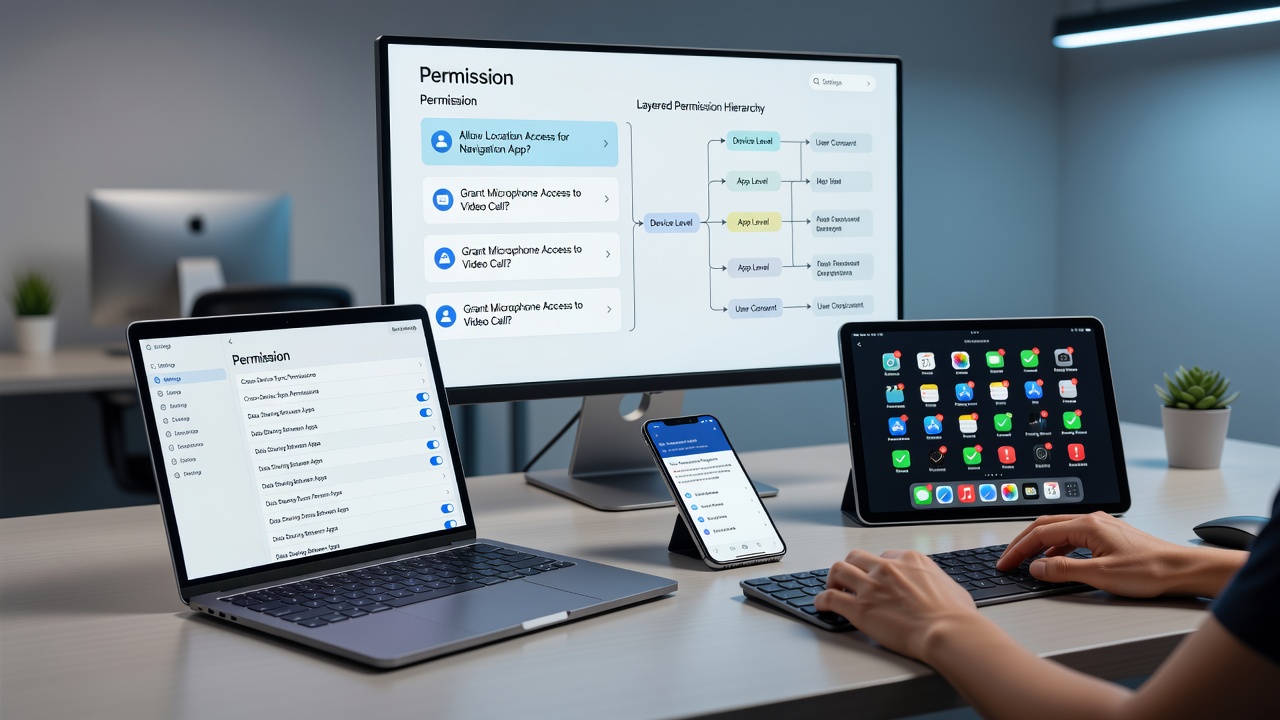
According to findings from the European Union Agency for Cybersecurity, such segmentation helps limit unauthorized flows but also generates user friction when devices fall out of sync during routine updates. In July 2026, several platform providers adjusted their cross-device permission APIs to address these gaps, resulting in more explicit documentation of layer boundaries within developer tools. Data collected post-adjustment shows reduced instances of unintended sharing in households managing four or more connected gadgets.
Account-Level Versus Device-Level Authorization
Account-based permissions serve as an overarching layer that applies across all linked hardware, while device-level settings provide overrides tailored to hardware capabilities or user context. Observers tracking everyday app usage patterns find that conflicts between these layers surface most clearly during migration events, such as adding a new tablet to an existing phone and laptop configuration. The system then prompts for reconciliation of prior grants, exposing how each layer maintains independent logs that do not always merge automatically.
Research indicates that apps employing end-to-end encryption often enforce stricter device-level checks to verify hardware attestation before allowing data access. This approach appears in productivity suites where calendar permissions granted at the account level still demand per-device confirmation for location-linked reminders. Such mechanisms underscore the deliberate separation of control tiers intended to balance convenience with containment of risk vectors.
Conclusion
Multi-device configurations continue to serve as practical testbeds for understanding how permission layers interact in real-world conditions. Patterns documented across studies reveal that effective controls depend on clear separation between account, runtime, and background tiers, wth synchronization challenges highlighting areas for refinement. As device counts rise and regulatory expectations evolve, the visibility of these layers through everyday usage provides ongoing insight into app ecosystem design.