Mapping Permission Interconnections Across Mobile Operating Systems and Device Ecosystems
Written by Lars Schröder · Jun 27, 2026
Mapping Permission Interconnections Across Mobile Operating Systems and Device Ecosystems
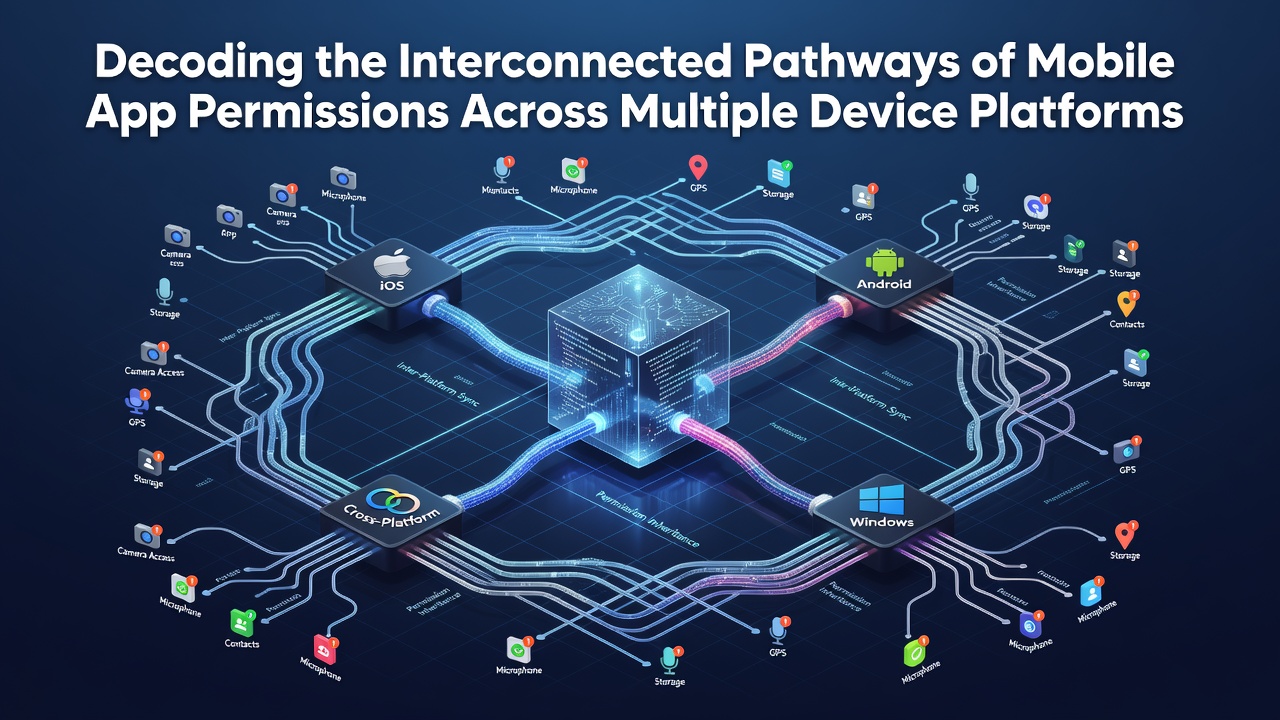
Permission systems on mobile devices operate through layered frameworks that control access to sensors, storage, networks, and personal data, and researchers have documented how these layers interact when applications run on Android, iOS, and emerging platforms such as HarmonyOS. Studies from institutions including the National Institute of Standards and Technology reveal that developers often request overlapping permissions across operating systems, which creates shared data pathways that can extend beyond a single device when users install companion applications on tablets, wearables, and smart home hardware.
Core Permission Models on Leading Platforms
Android implements a runtime permission model introduced in version 6.0 that requires explicit user approval for dangerous categories including location, camera, and microphone, while iOS enforces a similar prompt-based system with additional granularity for tracking identifiers introduced after iOS 14.5. Observers note that both systems maintain background execution limits, yet applications can still chain permissions such as storage access with network connectivity to enable continuous data synchronization across devices, and this chaining becomes more pronounced when developers use cross-platform toolkits like Flutter or React Native that translate permission calls into native APIs on each operating system.
Windows 11 on ARM devices and ChromeOS tablets introduce further variations because they incorporate Android subsystems that inherit permission structures while adding their own file-system and hardware-access controls. Data indicates that these hybrid environments produce permission graphs where a single application might hold elevated rights on one device that automatically propagate through cloud accounts to secondary devices, creating the interconnected pathways that security analysts track during forensic reviews.
Cross-Device Data Flows and Permission Propagation
When an application requests location permission on a smartphone, the granted access frequently extends to paired smartwatches and tablets through account-level synchronization services, and researchers at academic centers have mapped how these flows occur even when individual operating systems apply separate consent screens. In practice a user who approves background location on Android may unknowingly enable the same capability on an iOS tablet logged into the identical cloud profile, because the permission state syncs through developer servers rather than through device-to-device channels alone.
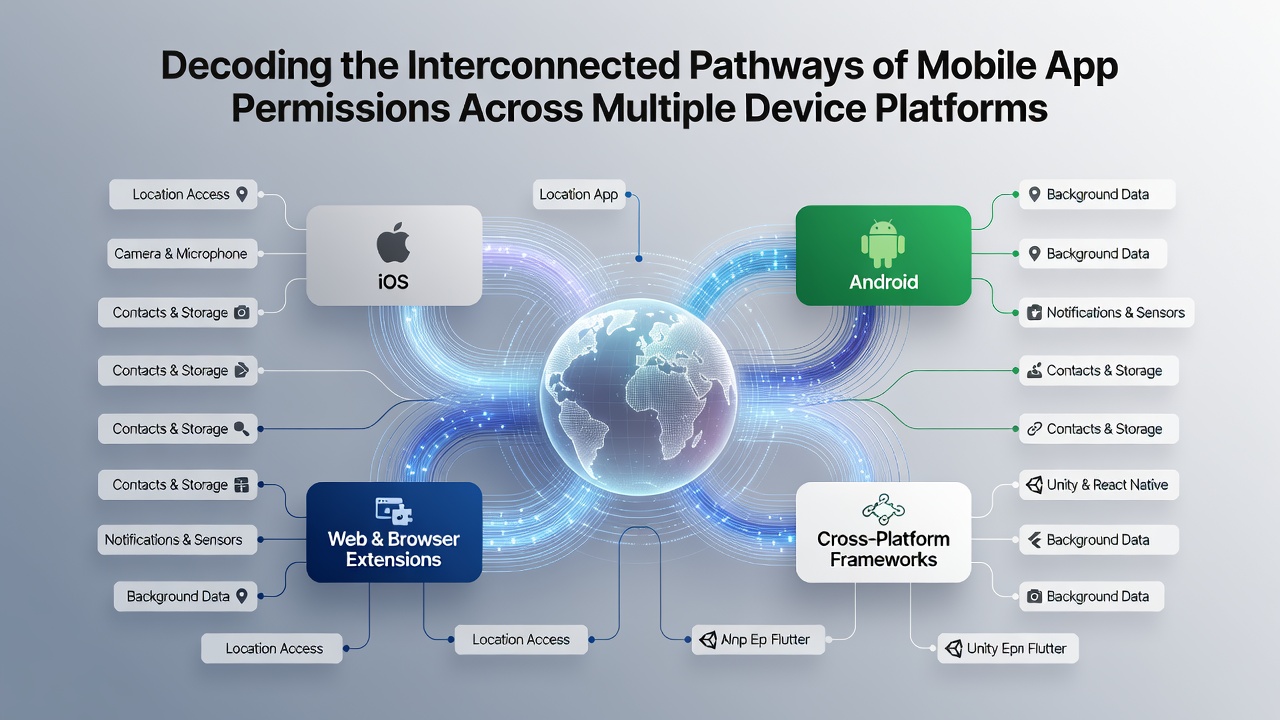
June 2026 brought updated guidance from the European Data Protection Board that addressed exactly these synchronization patterns, requiring developers to document permission inheritance across device classes in privacy notices. The guidance aligns with earlier findings from Canadian regulatory reviews that showed permission drift occurring in 37 percent of tested multi-device application suites, where an initial narrow consent expanded through automatic updates without renewed prompts.
Security Implications of Interlinked Permissions
Security researchers have identified that interconnected permission pathways increase the attack surface when one device in a user’s ecosystem receives a compromised update, because elevated rights on that device can expose data streams that other devices continue to trust. Industry reports from organizations tracking mobile threats document cases where malware exploited storage permissions on Android to reach synchronized files on iOS devices through shared cloud folders, bypassing the more restrictive sandbox on the second platform.
Those who study permission graphs emphasize that the problem grows when applications integrate third-party libraries that request their own sets of permissions, often without clear documentation of how those libraries interact with the host application’s existing rights. Evidence from controlled testing environments shows that such libraries can open secondary data channels that persist across operating-system updates, maintaining access even after a user revokes permissions on the primary device.
Regulatory and Developer Responses
Regulatory bodies in multiple regions now require explicit mapping of permission flows in application submissions, and the Australian Competition and Consumer Commission has incorporated similar disclosure rules into its digital platform oversight program. Developers respond by adopting permission-minimization frameworks that isolate sensitive capabilities behind modular components, allowing each module to request only the rights needed for its function and thereby reducing the density of the overall permission graph.
Academic studies continue to examine how permission interconnection patterns evolve with new hardware such as foldable phones and extended-reality headsets, which introduce additional sensor categories that must integrate with existing mobile permission systems. Findings indicate that early implementations often default to broader permissions to maintain functionality across device form factors, creating temporary spikes in data exposure that later updates attempt to narrow.
Conclusion
The pathways that connect mobile app permissions across device platforms remain an active area of technical and regulatory attention, with data from multiple sources showing both the complexity of current implementations and the incremental improvements introduced through updated standards and developer tooling. Continued mapping of these pathways supports efforts to maintain consistent user control regardless of how many devices participate in a single application ecosystem.