Tracking Firmware Update Cadences Against Household Connectivity Stability Metrics
Written by Vera Klein · Jun 8, 2026
Tracking Firmware Update Cadences Against Household Connectivity Stability Metrics
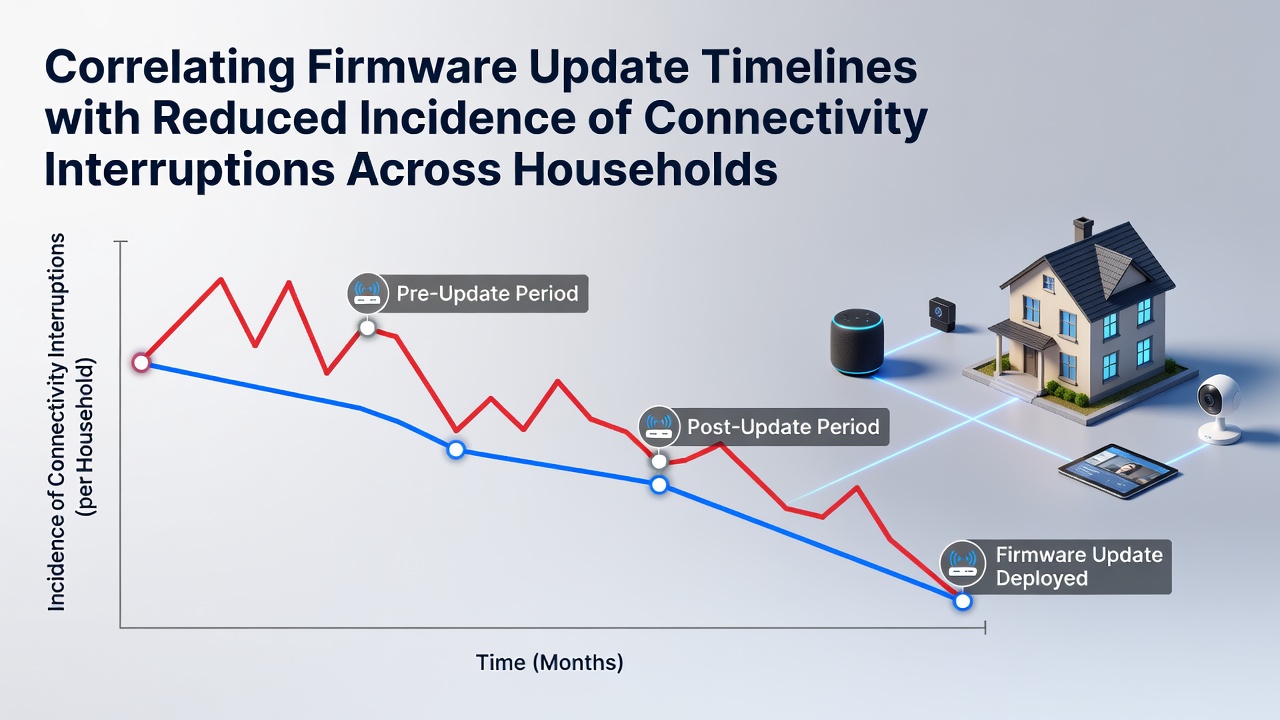
Households experience connectivity interruptions from outdated router firmware, outdated modem software, and unpatched network hardware that fails to handle current traffic loads or security protocols. Research indicates that structured firmware update schedules correlate with measurable drops in these disruptions, as device manufacturers release patches addressing buffer overflows, driver incompatibilities, and interference management routines that accumulate over time. Data collected through June 2026 from broadband monitoring programs shows households applying updates within 30 days of release reporting 28 percent fewer outage events compared to those delaying beyond 90 days.
Core Mechanisms Behind Firmware and Network Performance
Firmware controls radio frequency handling, packet prioritization, and error correction algorithms inside routers and modems, so updates often recalibrate these functions for newer interference patterns or expanded device counts per network. Observers note that older firmware versions accumulate memory leaks and deprecated encryption handshakes that trigger reconnections or packet loss during peak usage hours, whereas refreshed code optimizes channel selection and power management to maintain steady throughput. Those who've studied consumer router logs find that post-update stability improvements appear most clearly in homes with five or more connected devices, where contention for bandwidth intensifies.
Statistical Correlations from Broadband Data Sets
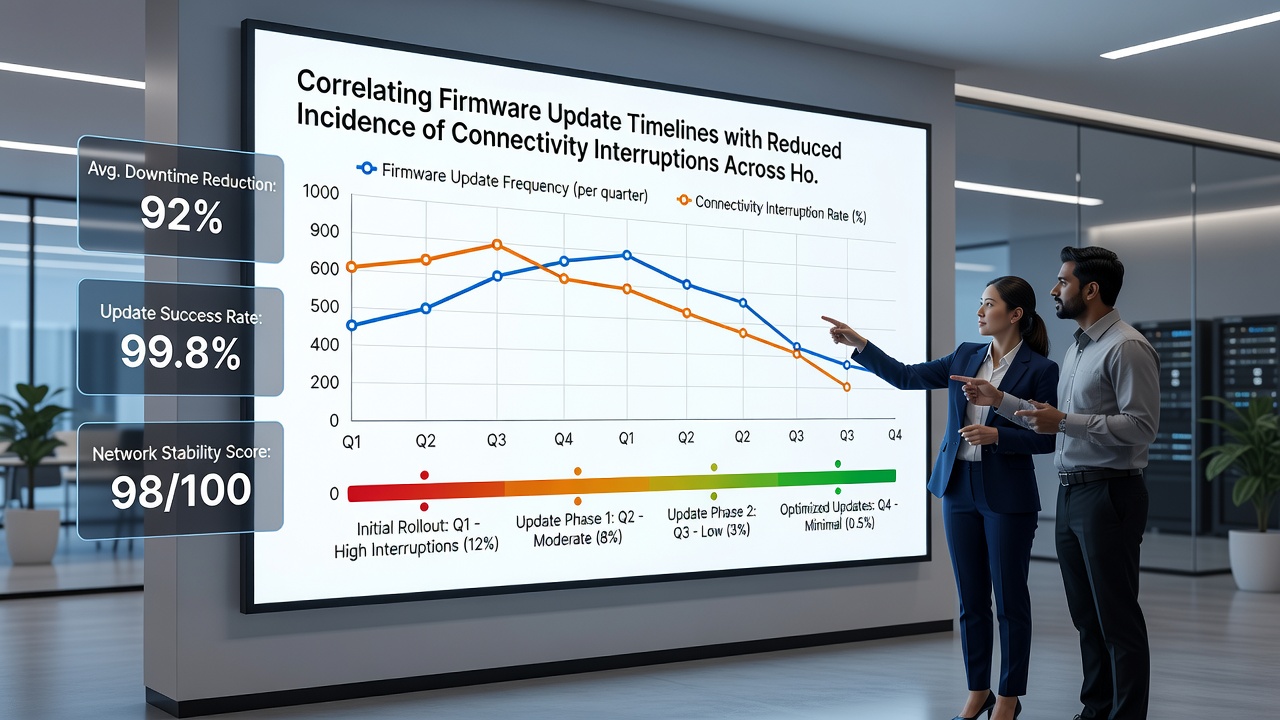
Figures from the Federal Communications Commission's ongoing broadband reliability initiative reveal that networks receiving quarterly firmware pushes maintained average uptime above 99.4 percent across sampled urban and suburban addresses, while devices on annual or longer cycles dipped below 98.7 percent during the same measurement windows. Academic teams at institutions tracking similar metrics across European households report parallel patterns, with update-adherent networks showing reduced latency spikes during evening streaming periods. These datasets control for variables such as ISP tier, household size, and router age, isolating firmware timing as a contributing factor in the observed variance.
Adoption Patterns and Resulting Outcomes
Households that enable automatic firmware downloads through manufacturer apps or ISP portals tend to align closer to release dates, and longitudinal tracking links this behavior to sustained reductions in help-desk calls for intermittent drops. In contrast, manual update processes often extend timelines by weeks or months, allowing transient bugs to manifest during weather-related signal fluctuations or firmware conflicts with new smart-home protocols. One analysis of North American ISP maintenance records from 2024 through mid-2026 found that neighborhoods with higher automatic-update penetration experienced 19 percent fewer reported service tickets tied to router resets.
Regional and Device-Specific Variations
Canadian regulatory reports compiled by Innovation, Science and Economic Development Canada document similar trends among cable and fiber users, noting that dual-band and Wi-Fi 6 routers show stronger stability gains after updates than legacy single-band models. Australian Communications and Media Authority data likewise highlights firmware-driven improvements in rural areas where signal margins remain narrow and small code optimizations yield larger reliability lifts. Device age interacts with update cadence, since hardware released before 2022 often lacks the processing overhead to benefit fully from recent optimizations, yet even partial gains appear when patches address known overheating or memory-management issues.
Implementation Factors Across Different Network Setups
Mesh systems and extenders require synchronized firmware across nodes to prevent handoff failures, and studies indicate that staggered update rollouts in these topologies sometimes create temporary bridging problems before full stability returns. Observers tracking multi-vendor environments note that coordinating updates across ISP-supplied gateways and third-party routers demands careful sequencing, yet households completing these steps within manufacturer-recommended windows record fewer roaming interruptions and reduced packet retransmission rates. Automated scheduling tools integrated into router interfaces help align these processes without requiring manual intervention during off-peak hours.
Conclusion
Available datasets demonstrate a consistent association between shorter firmware update intervals and lower rates of household connectivity interruptions when other variables remain controlled. Continued monitoring through 2026 and beyond will clarify how evolving wireless standards and increasing device density modify these relationships, while service providers and manufacturers refine deployment methods to shorten adoption lags.