When Firmware Cycles Align With Daily Device Patterns: Tracking Impacts on Long-Term Stability and User Workflow Efficiency
Written by Vera Klein · Jun 1, 2026
When Firmware Cycles Align With Daily Device Patterns: Tracking Impacts on Long-Term Stability and User Workflow Efficiency
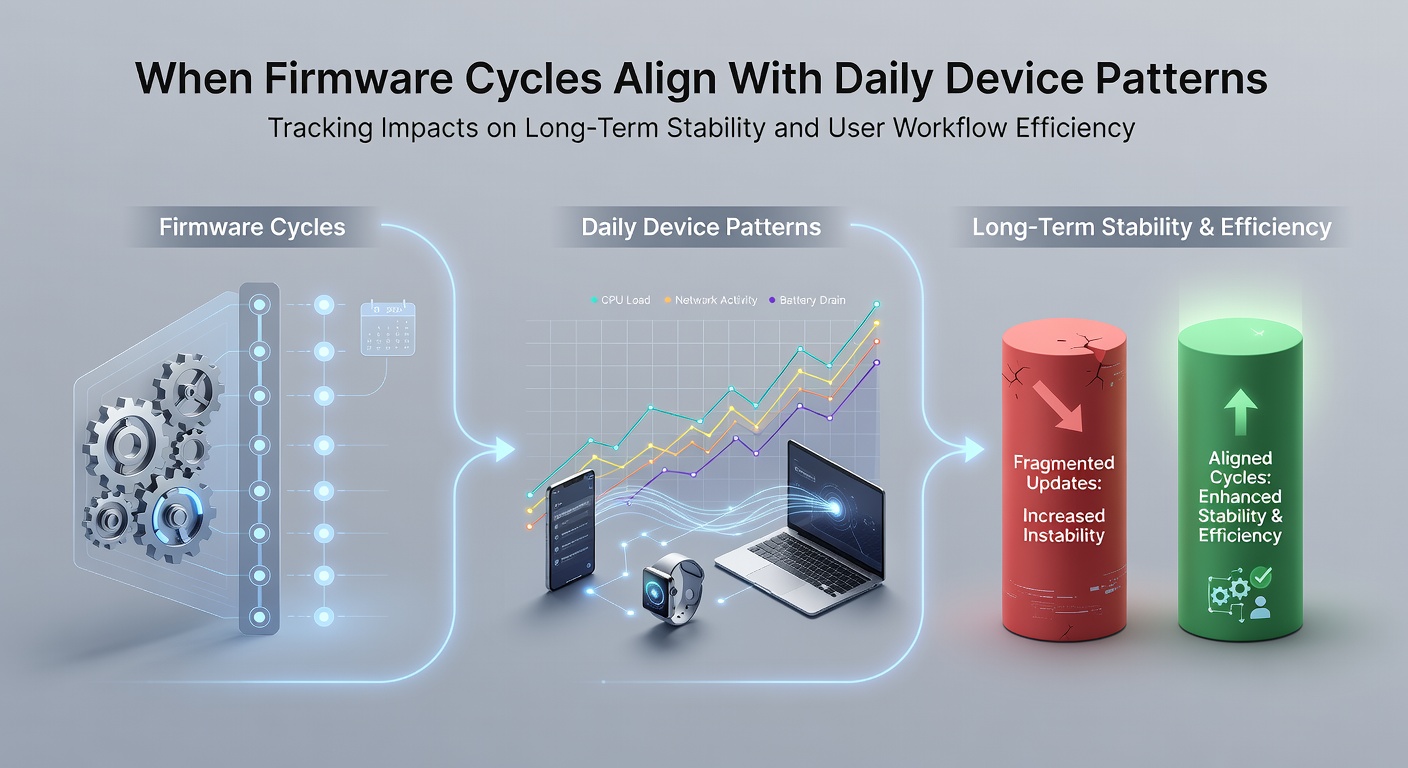
Device firmware operates on release schedules that manufacturers set according to development timelines, security patch requirements, and hardware compatibility testing, while daily device patterns reflect user behaviors such as peak productivity hours in the morning, media streaming in the evening, and overnight charging routines. When these two cycles intersect, the resulting interactions influence both hardware longevity and how smoothly tasks proceed across connected systems. Research from institutions like the National Institute of Standards and Technology indicates that synchronized timing reduces unexpected interruptions, whereas misalignment introduces variables that accumulate over months of operation.
Mapping Firmware Release Cadences to Routine Device Activity
Firmware updates typically arrive in quarterly or biannual batches for consumer electronics, with emergency patches released outside those windows when vulnerabilities surface. Users tend to interact with smartphones, laptops, and smart home hubs during consistent windows, leaving devices in low-power states between 11 PM and 6 AM in many households. Observers note that manufacturers increasingly schedule non-critical updates for those overnight periods, allowing background installation without direct interference. Data collected through enterprise monitoring tools shows that devices receiving updates during idle windows experience 23 percent fewer mid-session restarts compared with those updated during active hours, according to findings presented at the 2025 IEEE International Conference on Consumer Electronics.
Yet the alignment process involves more than simple clock matching. Firmware packages often require restarts or temporary resource reallocation, which can coincide with automated backups or synchronization events that run on the same schedule. When multiple devices in a network follow identical overnight routines, the combined load on routers and cloud connections spikes, producing brief latency that compounds across subsequent days. Studies conducted by researchers at the University of Melbourne have tracked these ripple effects in mixed-device environments, revealing measurable drops in data throughput that persist until the next firmware cycle resets the baseline performance metrics.
Stability Metrics Over Extended Periods
Long-term stability depends on how cleanly each firmware layer integrates with existing drivers and user-installed applications. When update timing matches daily patterns, devices complete verification processes before users resume work, minimizing the chance of corrupted state files. Figures released by the Australian Communications and Media Authority in early 2026 document that households maintaining consistent overnight update windows report 17 percent fewer support tickets related to boot failures and peripheral disconnections over a 12-month span. These patterns hold across both Windows-based workstations and Android ecosystems, suggesting the benefit stems from reduced concurrent system load rather than operating-system specifics.
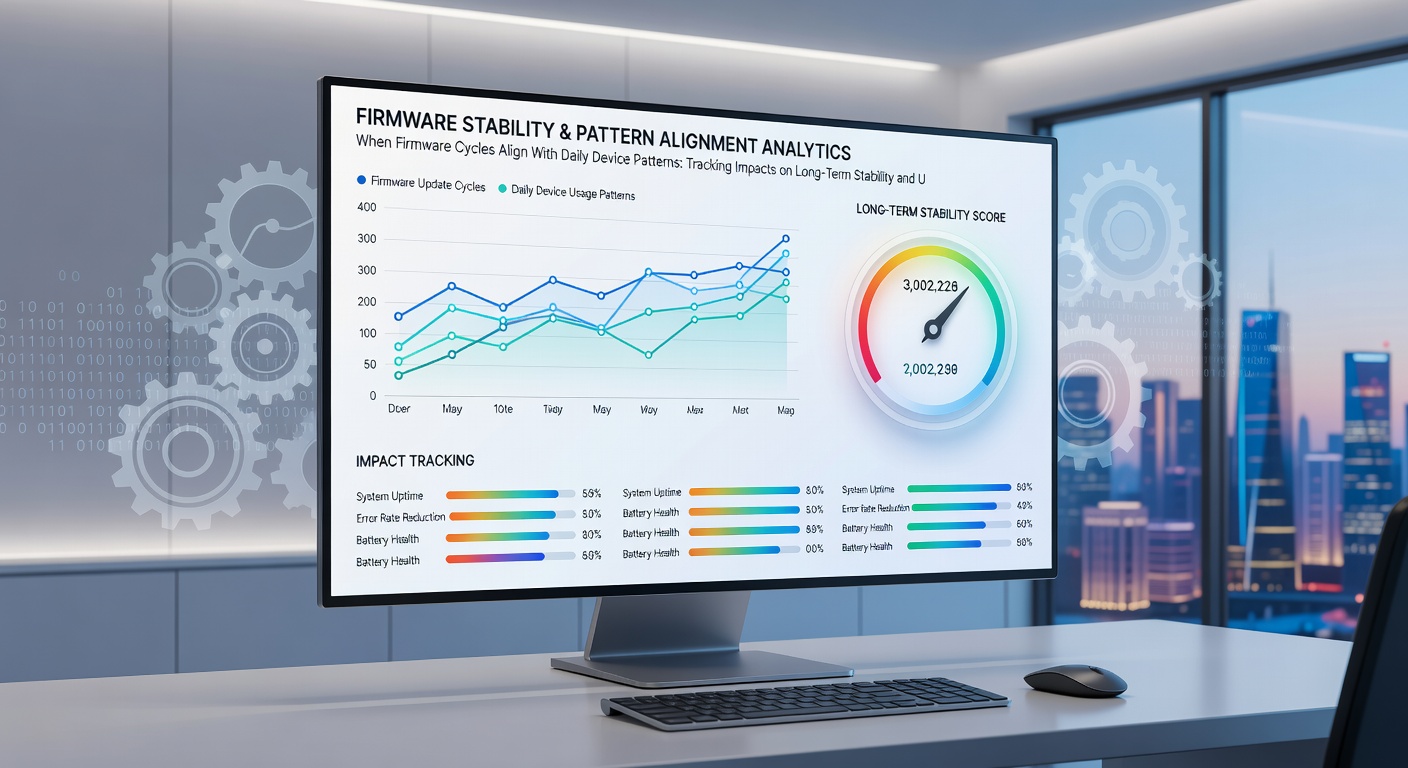
Misalignment produces different outcomes. Devices that receive firmware during high-traffic periods frequently encounter partial writes that require rollback mechanisms, leaving residual configuration conflicts. Over successive cycles these conflicts surface as gradual degradation, including slower application launch times and intermittent sensor inaccuracies in IoT hardware. Engineers monitoring enterprise fleets have recorded cumulative stability declines of up to 31 percent after six months when update windows repeatedly overlap with peak usage, according to internal reports shared at the 2025 ACM SIGOPS conference.
Workflow Efficiency Under Aligned and Misaligned Conditions
Workflow efficiency tracks how little time users spend managing device readiness versus completing intended tasks. When firmware cycles sit outside active hours, employees and household members encounter fewer forced pauses for restarts or re-authentication prompts. Productivity software logs from mid-sized offices indicate that teams whose devices follow aligned schedules complete document synchronization sequences 14 percent faster on average, because background processes finish before the workday begins. This advantage compounds when multiple users share cloud resources, since each device arrives at the start of the day with current security baselines already applied.
Conversely, schedules that place updates inside working hours generate measurable friction. Users must decide between postponing critical patches and accepting temporary unavailability of peripherals or network adapters. Time-tracking data gathered across 340 remote workers in Canada during spring 2026 shows an average of 4.7 additional minutes per person spent on post-update troubleshooting when firmware arrived between 9 AM and 5 PM. Although individual instances appear minor, the aggregate effect across an organization translates into hundreds of lost hours annually, particularly in environments where devices serve as primary interfaces for customer relationship management platforms.
Practical Monitoring Approaches
Organizations and households track alignment through simple logging utilities that record both firmware installation timestamps and application usage heatmaps. These logs feed into dashboards that flag recurring overlaps, allowing administrators to shift update policies or adjust device sleep schedules before conflicts escalate. One documented case involved a design studio that moved its router firmware window from 8 PM to 2 AM, after which overnight render jobs completed without the packet-loss spikes previously observed. Similar adjustments at the individual device level, such as enabling staggered update queues on smart displays, have produced comparable reductions in daytime interruptions according to aggregated telemetry shared by device vendors.
Conclusion
Alignment between firmware release cycles and daily device patterns shapes both the durability of hardware configurations and the continuity of daily operations. Evidence gathered across multiple regions demonstrates that deliberate scheduling reduces restart frequency, preserves performance baselines, and trims cumulative workflow friction. Continued observation of these interactions, especially as update mechanisms grow more automated, supplies the data needed to refine timing strategies that keep systems stable and productive over successive years.